The damage that Republican Supreme Court judges like Antonin Scalia and Clarence Thomas, to name only a couple, have done is truly incalculable. If appointing a justice who could be counted on to undo and clear away some of that right wing wreckage is too much to ask, what does it say for the main reason, the clinching reason given for supporting Democratic presidential candidates?
This is a crucial and defining moment for the presidency of Barack Obama, the instant at which he leaves his mark on the high court for perhaps twenty or thirty years to come. Retiring justice John Paul Stevens is indisputably the most “liberal” voice on the court, a man with a clear record of opposing many racist practices and authoritarian tendencies. Stevens is the liberal anchor of the court. To replace that liberal anchor with anyone less committed to upholding the rights of the poor and powerless is to unleash and further empower the likes of Roberts, Scalia and Thomas. That’s precisely what President Obama accomplishes with the appointment of Elena Kagan.
Except maybe to mention that other putative trump card for partisan Dems, abortion rights. But the party is not doing such a great job defending the Right to Choose, it seems. This sad, and entirely predictable, state of affairs leads a Firedoglake diarist to lament that “history will show that Obama threw away over 35 years of pro-choice blood, sweat, and tears to give health insurers $474 billion over 6 years… and set us down the path to a country where most women will live in the pre-Roe world.”
The Passing Show, the BBC documentary about Ronnie Lane, is now online, in six parts. I own it on DVD and watch it all the time. You really should spend the money to buy it, but I’d understand if you wanted to check it out for free, while it lasts, anyway.*
If you know and love Ronnie Lane as I do, watch it. If you don’t know him, all the more reason to watch it.
Lane surfaced in the Small Faces, along with Steve Marriott and Kenny Jones (and later Ian McLagan), one of the best bands in the ridiculously thriving London R&B scene in the mid-60s (the Stones! the Pretty Things! the Yardbirds! the Who! the Kinks!). The Small Faces, minus Marriott and with the addition of Rod Stewart and Ron Wood, became the Faces, who might have been the GREATEST BAND EVER but it’s hard to tell, because their recorded output, while sparkling, is a little sparse. Playing live, they were legendary.
Lane wrote and sang a slew of good songs for Faces, but apparently was not allowed to sing live, except for the opening verse to a cover of “Maybe I’m Amazed.” I read somewhere that Ronnie once posed an “It’s Rod or me” ultimatum to the rest of the band. If true, that was a fairly major miscalculation. (“Ronnie, we love you, but he’s ROD STEWART”).
While most Faces songs were boozy, bawdy and strutting, Lane’s were modest and introspective, though not without their own wit and raunchiness. Rod’s were Saturday night; Ronnie’s were Sunday morning. His greatest song, to my mind, is “Debris,” a son’s loving reminiscence, centered on the vivid image of his father combing through junk on blankets at open-air markets in London’s bombed out East End.
Ronnie walked away from the Faces at their peak. He took his money (which he apparently kept in cash, in a bag) and (over)paid for an old bus and a bunch of circus tents and formed the Passing Show, which toured the English countryside, with burlesque dancers and jugglers and sword swallowers and his band. No one really knew what they were doing, and everyone had a great time. Until the money ran out. He lived at a ramshackle farm, where his rock star buddies came around to drink and sing songs, and recorded several wonderful but not especially successful albums.
Then Ronnie got MS, which had also afflicted his mother. His famous music mates (Clapton, Beck, Winwood, Page, Charlie Watts) staged a series of benefits for him and for MS research. He got swindled for a shockingly large amount by a woman in Texas, ended up moving to Austin, and became a fixture of the music scene there when he was well enough to play. He moved a final time to Colorado, where the disease took his life.
The documentary is fairly conventional, but the details and love in the tales told make up for the formulaic structure. In this, the first segment, I especially loved Eric Clapton’s account of the first time he saw the aptly named Small Faces: “These little guys came into the guitar shop and they were really little, they looked like they were like four feet tall. It was like hobbits.” And Ronnie’s account of the early days: “I mean none of us could play. I was just learning to play the bass and Steve was just learning the guitar. But that’s all right. We was keen.”
I don’t know why his story resonates with me so much. His music was lovely, homely in the best sense. He turned his back on rock stardom and became a gypsy. He was the original roots rocker. He didn’t give a damn about money. In America, we prate on about following your dream, but always with the implication that eventually the dream will bring material success. Ronnie followed his, and the results were rather more austere.
Can you show me a dream
Can you show me one that’s better than mine
Can you stand it in the cold light of day
Neither can I
* The DVD runs 105 minutes, whereas the online version represents the trimmed 60-minute TV version.
Now Roundup, Monsanto’s crack for farmers, is having trouble killing pigweed, and the expensive herbicide/seed program isn’t looking like such a good deal anymore. But the large-scale farmers have a lot invested in industrial farming, so many are just layering new poisons onto the Roundup, and are even encouraged to do so by Monsanto, which, the Times reports, “is it is taking the extraordinary step of subsidizing cotton farmers’ purchases of competing herbicides to supplement Roundup.”
Michael Pollan, one of the Room for Debate voices in a Times discussion on the subject, points out that this should come as a surprise to exactly no one. “A product like Roundup Ready soy is not, as Monsanto likes to claim, ‘sustainable.’ Like any such industrial approach to an agronomic problem — like any pesticide or herbicide — this one is only temporary, and destroys the conditions on which it depends. Lucky for Monsanto, the effectiveness of Roundup lasted almost exactly as long as its patent protection.”
The Times parrots without comment the claim that no-till agriculture with “Roundup Ready” seeds is “environmentally friendly.” True, it reduces erosion and lessens runoff, but I don’t think everyone really understands what really goes on in this kind of agriculture. (Interested in the details of how glyphosate works? Check out this fact sheet from beyondpesticides.org (pdf). “Environmentally friendly”? I’m not so sure.)
And here is where I would like to make a rather bold suggestion: Why not just call the superweed callaloo and eat it?
Pigweed is amaranth, after all, and amaranth is edible and nutritious, both as leaves and seeds. When we first moved to Kentucky, Florence, our friend and one-time babysitter (from a past life when we were both had jobs and 401ks and benefits in New York), came to visit us. She looked into a field of what we called pigweed, and saw callaloo, a delicious green from her youth near Ocho Rios, Jamaica. She waded in, harvested a few large bags, trimmed it and cooked it up with lots of garlic and hot peppers and it was delicious.
I wouldn’t encourage anyone to eat the pigweed laced through with Roundup of course. And I’m not sure the resistant palmer amaranth is the same variety of amaranth that we enjoyed. But if there are varieties of a “superweed” that are edible and nutritious, a smart farmer might take the hint from mother nature and grow the native plant that doesn’t need massive doses of chemicals to thrive.
Or not. Even if that farmer is dead-set on continuing with the commodity crop (and of course that’s where the (subsidy) money is), The redoubtable Rodale Institute has been doing some great work with organic no-till methods.
"I believe it will be a quick war, that there will be few losses."
I know. 2002 was a really long time ago. But you’d think more than eleven members of Congress would remember that sanctions against Iraq, based on now- (and then-) laughably false accusations, only made it easier for the war instigators to take the next step, to attack the country that was the object of the sanctions.
But no.
Unless you live in the districts represented by seven Democrats–Reps. Baird (WA), Moore (WI), Baldwin (WI), Blumenauer (OR), Kucinich (OH), Waters (CA), McDermott (WA)–or four Republicans–Flake (AZ), Jones (NC), Paul (TX), Duncan (TN)– your congressperson voted for a bill that will pave the way for more severe sanctions on Iran, a country that has not attacked another country in oh, say, two or three centuries, but which has been accused, repeatedly, and in dozens of different ways, of possessing imaginary nuclear weapons.
It has been accused of this by the U.S.A., a country that possesses, ah, ballpark figure here, 9,960 intact warheads, and has tested them in just slightly irresponsible ways, on hapless Pacific islanders and its own citizens alike. Also, we, uh, used them against a civilian population, not once but twice, without warning, and detonating them at an altitude that insured maximum death and destruction.
So we know how awful nuclear weapons are! Trust us.
But no matter. Iran (“a festering sore,” according to noted trash-talker Harry Reid) is doing something sneaky, and we will do anything to stop them from doing … sneaky things, even if we can’t really say exactly what they are. In the past decade or so, we’ve spent a trillion dollars on a war that started in a manner suspiciously similar to the one we’re ready to get underway. And, as Ron Paul pointed out yesterday, a sanctions regime was an integral part of the buildup to that war.
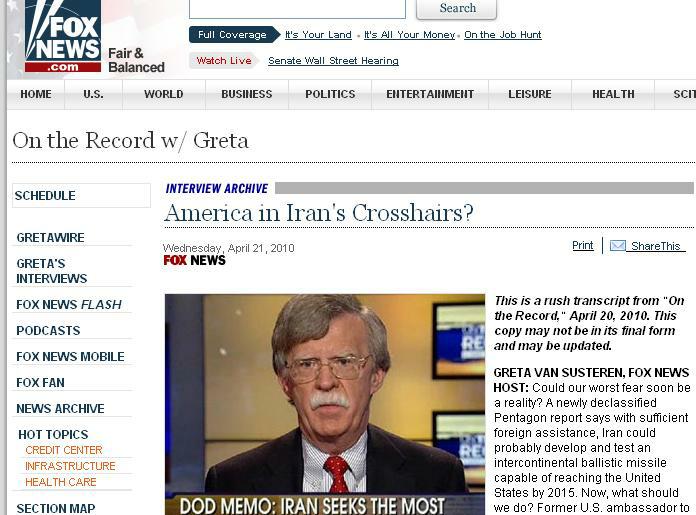
I rise in opposition to this motion to instruct House conferees on HR 2194, the Comprehensive Iran Sanctions, Accountability and Divestment Act, and I rise in strong opposition again to the underlying bill and to its Senate version as well. I object to this entire push for war on Iran, however it is disguised. Listening to the debate on the Floor on this motion and the underlying bill it feels as if we are back in 2002 all over again: the same falsehoods and distortions used to push the United States into a disastrous and unnecessary one-trillion-dollar war on Iraq are being trotted out again to lead us to what will likely be an even more disastrous and costly war on Iran. The parallels are astonishing.
We hear war advocates today on the Floor scare-mongering about reports that in one year Iran will have missiles that can hit the United States. Where have we heard this bombast before? Anyone remember the claims that Iraqi drones were going to fly over the United States and attack us? These “drones” ended up being pure propaganda – the UN chief weapons inspector concluded in 2004 that there was no evidence that Saddam Hussein had ever developed unpiloted drones for use on enemy targets. Of course by then the propagandists had gotten their war so the truth did not matter much.
We hear war advocates on the floor today arguing that we cannot afford to sit around and wait for Iran to detonate a nuclear weapon. Where have we heard this before? Anyone remember then-Secretary of State Condoleeza Rice’s oft-repeated quip about Iraq, that we cannot wait for the smoking gun to appear as a mushroom cloud?
We need to see all this for what it is: Propaganda to speed us to war against Iran for the benefit of special interests.
Where have we seen this before?
Let us remember a few important things. Iran, a signatory of the Nuclear Non-Proliferation Treaty, has never been found in violation of that treaty. Iran is not capable of enriching uranium to the necessary level to manufacture nuclear weapons. According to the entire US Intelligence Community, Iran is not currently working on a nuclear weapons program. These are facts, and to point them out does not make one a supporter or fan of the Iranian regime. Those pushing war on Iran will ignore or distort these facts to serve their agenda, though, so it is important and necessary to point them out.
Some of my well-intentioned colleagues may be tempted to vote for sanctions on Iran because they view this as a way to avoid war on Iran. I will ask them whether the sanctions on Iraq satisfied those pushing for war at that time. Or whether the application of ever-stronger sanctions in fact helped war advocates make their case for war on Iraq: as each round of new sanctions failed to “work” – to change the regime – war became the only remaining regime-change option.
This legislation, whether the House or Senate version, will lead us to war on Iran. The sanctions in this bill, and the blockade of Iran necessary to fully enforce them, are in themselves acts of war according to international law. A vote for sanctions on Iran is a vote for war against Iran. I urge my colleagues in the strongest terms to turn back from this unnecessary and counterproductive march to war.
Here I should say, “Contact your Congressman.” But geez. 403-11. Kind of an uphill struggle.
Of course, this war has been on the way since Shock and Awe days (remember: “Anyone can go to Baghdad; Real men go to Tehran”?)
What’s holding up actually attacking? Is there some sanity hiding behind the bellicose talk? Do the gung-ho Congressfolk and military wizards of our broke-ass country realize the lunacy of opening another front in their crazy Long War (my hope)? Or (my fear) are they just waiting for a better provocation? “All you gotta do is pick up a weapon.”
Nature is weird and wonderful, and to my city-boy eyes nothing is quite as weird/wonderful as a broody hen.
Two years ago, I took advantage of two broody hens and stuck a bunch of eggs under each of them, and we got about 10 new chicks that year.
Last year, I tried the same with one hen, but she turned out to be stark raving mad. From my limited observation, broodiness has an at least tangential relationship to full-on insanity. The hen kept pecking her eggs, for reasons still unclear to me, and at the same time insisted on staying on the nest, which in short order became a sticky rotting mess. Only one baby chick survived, and that one was blind in one eye. I think because of that messy nest situation.
This subject of this year’s experiment seems tidy and calm, though frighteningly and obsessively focused, as are all broody hens. She seems capable of starving herself in her dedication to her compulsion. I have to remind myself to yank her off the nest once a day.
I hope in three weeks time we get a bunch of baby chicks out of her.
Now, really I am no expert on broody hens, having only had a few years to observe what is an ever rarer phenomenon in nature, as it has been deemed wise to breed broodiness out of nearly every variety of chicken you’ll see, because a broody hen is not a laying hen. That strikes me as a little shortsighted, and it also strikes Harvey Ussery the same way. Mr. Ussery, a contrary farmer in the best sense of the term, , has written an interesting article on the benefits of using, not fighting, broodiness.
Malcolm McLaren. Dead. The punk era with which McLaren will always be associated was probably the most over-analyzed period in music history. Everyone on the scene wrote a book about it, it seems. I certainly have nothing to add.
Beyond his controversial role as the Svengali behind the Sex Pistols (or, equally plausible, the guy who totally ripped them off), McLaren had a long and spotty subsequent career. Some of his efforts were more successful that others. Personally, I have a soft spot for Fans, his opera/pop thing, which I have listened to regularly for a quarter of century now. For whatever reason, I posted the lovely Madame Butterfly video to my Facebook just the other night.
I also remember he wrote a funny, surreal piece for the NY Times magazine some time back, about his early adventures as an apprentice wine taster:
Every day, the trainees were blindfolded and led to a spittoon. Here we were given test tubes of wine and asked to taste but not swallow. Blueface (as the general came to be known by us for the blue veins that ran across his face, like a gorgonzola) would then lecture us about the qualities each wine possessed, followed by the inevitable question: What did we think of it?
The first time this happened, we were tasting reds from Burgundy: “McLaren, tell us! What do you think of this wine?”
Blind, unable to assemble a coherent thought, I blurted out: “Yessir! Very nice. Deep . . . uh, rich, rich, very rich! Sweet, sweet.”
“What are you talking about?” he boomed. “That’s Pommard! A premier cru —1950!”
Fair enough. But then things began to get strange. “Goddamn, tastes like an army has been through there . . . that sodden earth! All mud and slush. All right for those frogs, but what we like is something a little fresh, don’t we?” he said, elbowing me in the ribs. “Something young and untouched!”
Old Blueface made us taste another.
“Now, that’s a little girl from Morey-St.-Denis!” he said. “A virgin. She needs to air a bit. Then we can all prod it, taste it and love it as we truly deserve, as God appointed us.” While we young virgins stood frozen, embarrassed and blushing from learning about the facts of life this way, he talked about wines for men and wines for women. Wine that tastes like a man, and wine that tastes like a woman. Wine that was friendly, frilly, silly or simply handsome; heroic or cowardly and foolish. And wines that defied discussion — these were apparently homosexual.
….
During our lunch breaks, the general would march us past St. Martin’s school of art. One day I broke ranks and followed a pack of girls wearing mohair sweaters and fishnet stockings into the school, where I came across a buxom woman — an actual woman! — perched naked on a stool, surrounded by students sketching this sexual apparition. How can I do that? I wondered.
Mohair sweaters and fishnet stockings! McLaren endeavored successfully to get himself fired, and was off to a series of art schools (he was kicked out of most of them). The rest is history. RIP.
That episode of Jamie Oliver’s Food Revolutionwhere he showed kids all the nastiness that goes into chicken nuggets—and they wanted to eat them anyway? As upsetting as it was, it did save me the bother of showing it to my nugget-inhaling son, as it will probably achieve the same (opposite of intended) result.
I don’t for a moment doubt Jamie Oliver’s good intentions in this food crusade of his. But he is a wealthy celebrity chef, and he will get over it. He is probably already home in Britain, regaling his like-minded friends with tales of the benighted colonials over some delightful meal he’s just whipped up, along with a number of impeccably complementary bottles of tasty plonk.
Meanwhile, there is growing evidence that speaking out about the garbage served to kids in schools can have career-threatening consequences. From La Vida Locavore, here is an excerpt from the woeful saga of what happened to a school teacher who became concerned about what her students were eating. (Writing in haste today, so apologies for the extensive cut-and-pastiness).
Mendy Heaps, a stellar English teacher for years, had never given much thought to the food her seventh-graders were eating. Then her husband, after years of eating junk food, was diagnosed with cancer, diabetes and high blood pressure and suddenly the french fries, pizza and ice cream being served in the cafeteria at rural Elizabeth Middle School outside Denver, Col., took on a whole new meaning.
Heaps was roused to action. She started teaching nutrition in her language arts classes. She bombarded colleagues, administrators and the local school board with e-mails and news clippings urging them to overhaul the school menu. She even took up selling fresh fruits and healthy snacks to the students on her own, wheeling alternative foods from classroom to classroom on a makeshift “fruit cart,” doling out apples for a quarter.
Finally, the school’s principal, Robert McMullen, could abide Heaps’ food crusade no longer. Under threat of being fired, Heaps says she was forced to sign a personnel memorandum agreeing to cease and desist. She was ordered to undergo a kind of cafeteria re-education program, wherein she was told to meet with the school’s food services director, spend part of each day on lunch duty recording what foods the students ate, and compile data showing the potential economic impact of removing from the menu the “grab and go” foods Heaps found so objectionable. … The case of Mendy Heaps is a stark reminder that at least one voice is largely missing from the debate over school food that’s getting so much attention lately: the voice of teachers. Teachers see what kids eat every day. They have opinions about the the food and how it impacts children’s health and school performance. Yet they are almost universally silent.
… “When I got the memo, everyone became afraid,” said Heaps. “If I tried to talk about the memo, no one wanted to listen. I got a little support from a couple of teachers, but not very much. Everyone wanted to forget about it and they wanted me to forget about it too…The only thing I still do is write letters and try to get someone interested! I’m working on one for Michelle Obama right now.”
Music cognoscenti know: Buck Owens was the bee’s knees–in spite of the fact that in his later years, there was a certain clownish aspect to his act. You could make the case that Hee Haw was on the air for a little too long. But in his prime, Buck was one cool country cat.
Here are a couple of clips of the glory years of the Buckaroos, featuring Don Rich, Buck’s guitar man and harmonist (“he sings higher than a cat’s back”). Rich died in a motorcycle crash in 1974, and Buck was never the same.
Rich opened for Elvis at the age of 16, and had a regular gig at Steve’s Gay 90’s Restaurant in South Tacoma when Buck Owens hired him as fiddler. Fender gifted him a Champagne Sparkle Telecaster, and he could really wear a Nudie suit.
That distinctive accent harmony was a defining feature of the Bakersfield Sound. Merle Haggard, who performed in Buck’s band for a while (and who named them the Buckaroos) also made amazing use of it. (Check out the Bonnie Owens part in the studio version of “Today I Started Loving You Again”–alas, I could not find this online.) Merle and Buck had a pretty contentious history together (including sharing a wife, though not simultaneously), so I would not be surprised if they both took credit.
I think of how musically genius these boomtown hicks were, when listening to the New Pornographers’ Adventures in Solitude. That first verse with the spare accent harmonies. Pure Bakersfield.
* While I’m digressing on the subject of criminally overlooked collaborators of the Bakersfield Era, I would recommend a listen to Laura Cantrell’s gorgeous, heartbreaking song about Bonnie Owens:
“‘Jamie Oliver’s Food Revolution’ regurgitates the worst of reality TV pap”? Here we go again. A writer for a reputable mainstream media player purports to speak for the common man by defending (or getting defensive about) what really is a tragic obesity epidemic because he doesn’t like being talked down to by “a foreigner with meticulously rumpled hair and a funny accent telling them to hand over the fries.”
Or, as the morning deejays at Morgantown’s “The Dawg” put it to Oliver: “We don’t want to sit around and eat lettuce all day. Who made you king?”
I’ve written about this before. Point out that Americans’ diets are killing them, and you can count on being shouted down and characterized as elitists, snobs, and–the lowest blow of all–foodies! These attacks on locavores seem to come with great regularity from highly esteemed conventional media sources such as the Washington Post, the Atlantic Monthly, the New York Times and Slate. Their faux-populist message sows the seeds of doubt about the message of food activists, and gives cover to continuing business as usual.
In a sad, not unrelated development, and in case you thought steps were being taken to improve this situation, Jill Richardson’s great La Vida Locavore blog reports that the USDA had substantial input from … makers of junk food in the drafting of new nutrition standards for American schools.
Why is the junk food lobby at the table to make rules about nutrition? Would you have a criminal at the table to make laws about crime? The American Beverage Association, Coca Cola, Mars, Nestle, and PepsiCo were all included in negotiations for the new school lunch nutrition standards in [Senator Blanche] Lincoln’s child nutrition bill. Under the bill, the USDA will set one set of nutrition standards for all food sold in schools during the school day (including vending machines). This is a change from current laws, which forbid the USDA from setting rules over most food sold in schools outside of the federally-reimbursable school lunch (i.e. the meal served to kids who receive free lunch).
So here’s the question: What did public health groups give up by negotiating with the junk food lobby? What do public health experts think the school nutrition standards should be, and how far apart is that from the actual language of the bill?
Hmm. Cutting a deal with the very industries that are the engines for a national health catastrophe. Where have I seen this before?
Update: In a Firedoglake diary titled Lousy School Lunch Bill, One Step Closer to Passage Richardson wonders why “Democrats put their least loyal Senator in charge of one of their highest profile issues.” That Senator would be Ms. Blanche Lincoln, who somehow got to be the author of the child nutrition bill inspired by Mrs. Obama herself:
And Blanche Lincoln is no Michelle Obama. She’s not even as progressive as Barack Obama, who called for $10 billion in new money over 10 years for child nutrition, a number Lincoln reduced by more than half.
To put that in easier to understand terms, Obama’s proposal would have given up to $.18 in addition funds to each child’s school lunch. Lincoln’s bill gives each lunch $.06. Compare that to the School Nutrition Association’s request to raise the current $2.68 “reimbursement rate” (the amount the federal government reimburses schools for each free lunch served to a low income child) by $.35 just to keep the quality of the lunches the same and make up for schools’ current budgetary shortfall. School lunch reformer Ann Cooper calls for an extra $1 per lunch to actually make lunches healthy. So any amount under $.35 is no reform at all, and Lincoln gave us $.06.
Richardson goes on to put the awful facts of this matter in context:
Unfortunately, the only real way to improve the quality of school lunch is money. Schools need money for better food but they also need money for labor, training, and equipment. And the equipment needed is sometimes as simple as knives and cutting boards, essential tools for preparing fresh fruits and vegetables that all too many schools lack. And it’s money that this bill does not provide.
In the case of school lunch in particular, where the most vulnerable members of our society – low income children who cannot afford to bring a healthy lunch from home – are affected, the government’s failure to provide healthy food is utterly unconscionable. It’s also stupid, since an estimated 1 out of every 3 children born in 2000 will suffer from Type II Diabetes during their lifetime, and diabetes is one of the most expensive health problems to treat. Every penny we don’t pay now for school lunches is money we will spend later on Medicaid and Medicare for children who grow up to suffer from diabetes. But, as a House staffer put it to me when I raised that point, “the CBO [Congressional Budget Office] doesn’t score that way.” When the government tabulates whether or not a program is saving money, future expenditures on predictable, preventable health conditions aren’t added in.