Locovores, locavores, See these people can’t even agree on how to spell their own damn movement!

A handsome and not at all smelly locovore family

In the unlikely forum of Foreign Policy magazine, Felix Salmon, the financial blogger for Reuters, has crafted a love letter to locovorism, a movement that’s getting sneered at a lot lately as being a fantasy of snobbish foodies and manure-spattered alternative farmers reeking of dirt and garlic.  (After a while, though, you find that smell sexy).

Don’t have much time, so will quote a couple snippets, and encourage all to read the whole thing.

There are three big problems with monoculture, all of which can be addressed with a more sensitive, bottom-up, heterogeneous, small-scale agricultural model.

First, monocultures are, by their nature, prone to disastrous bouts of disease. Ireland’s population was decimated by the potato famine; France’s vines were wiped out by phylloxera; a disease called huanglongbing now threatens all of California’s citrus crop. If you only grow one crop, the downside of losing it all to an outbreak is catastrophe. In rural Iowa it might mean financial ruin; in Niger, it could mean starvation.

Big agriculture companies like DuPont and Archer Daniels Midland (ADM), of course, have an answer to this problem: genetically engineered crops that are resistant to disease. But that answer is the agricultural equivalent of creating triple-A-rated mortgage bonds, fabricated precisely to prevent the problem of credit risk. It doesn’t make the problem go away: It just makes the problem rarer and much more dangerous when it does occur because no one is — or even can be — prepared for such a high-impact, low-probability event.

A more natural and heterogeneous system, by contrast, is inherently much more resistant to disease because few (if any) diseases can successfully wipe out a wide range of crops. Natural resistance is also much more likely to be found where there are a wide range of native varieties growing in the same place. Nature abhors a monoculture, and a system of smaller farms growing a large number of crops will be able to resist any disease in a way that no single crop can. If one or two of them gets hit, the damage done is manageable rather than devastating. It doesn’t have the same economies of scale, of course, and it might not have magical flood-resistant properties. But it works, all the same.

This is a hugely important issue to consider, especially as a few opportunistic spores of Ug99 blowing on a kind wind might lead in fairly short order to a worldwide shortage of wheat-based foodstuffs.

The second problem with monoculture is that new, high-tech, disease-resistant crops tend to come with something that is just as unwelcome as disease: patents. Many of these high-tech crops can’t reproduce organically and need to be bought afresh each season from the patent holder. And all of them come with layers of intellectual-property laws too complex for most non-lawyers to decode. So how do we expect impoverished and often illiterate populations in some of the most remote areas of the world to take advantage of them? Non-engineered crops, the natural ones that replicate themselves, are patent-free.

Finally, monoculture is based on the principles of trade and comparative advantage. It’s supposed to work like this: Enormous areas specialize in growing, say, corn and soy; they then sell those crops and use the cash they get in return to buy a wide variety of foods.

This works in the United States, but it doesn’t work well in the rest of the world, where trade barriers are often high, and selling crops for money and then exchanging that money for food is a complex and fraught process. Farmers growing cash crops in remote areas are often taken advantage of by middlemen, who take a cut of the profit and pay the growers much less than the market rate.

….It’s also worth bearing in mind that there’s already more than enough food being grown to feed every person on the planet. Right now, when we grow more food, the main consequence is more obesity and waste in rich countries. In fact, we have reached such a level of excess food that powerful agricultural lobbies — supported by big businesses like ADM — have been pushing for food crops to be turned into biofuels, especially in the United States and Brazil. It simply isn’t the case that we are at risk of shortages without these monoculture crops.

The hunger that persists is a question of distribution; calories don’t just magically trickle down to the people who really need it. Locavorism gets right to the root of this problem. By growing multiple crops close to home, less is likely to spoil and more will reach the table.


The Green Revolution’s bitter fruit: a Biblical plague?

There’s an interesting and frightening story in Wired this month about the potential catastrophe represented by puccinia graminis, or Ug99, a fungus that causes stem rust in wheat. Writes Brendan I. Koerner:

Stem rust is the polio of agriculture, a plague that was brought under control nearly half a century ago as part of the celebrated Green Revolution. After years of trial and error, scientists managed to breed wheat that contained genes capable of repelling the assaults of Puccinia graminis, the formal name of the fungus.

But now it’s clear: The triumph didn’t last. While languishing in the Ugandan highlands, a small population of P. graminis evolved the means to overcome mankind’s most ingenious genetic defenses. This distinct new race of P. graminis, dubbed Ug99 after its country of origin (Uganda) and year of christening (1999), is storming east, working its way through Africa and the Middle East and threatening India and China. More than a billion lives are at stake. “It’s an absolute game-changer,” says Brian Steffenson, a cereal-disease expert at the University of Minnesota who travels to Njoro regularly to observe the enemy in the wild. “The pathogen takes out pretty much everything we have.”

This is a thorough look at what could develop into something truly awful. Massive starvation is a not implausible result, if a few opportunistic spores blow into the wrong spots. (Some scholars apparently believe stem rust was one of the Biblical plagues, FWIW.)

But I have to voice my objection to a basic premise of the article, the characterization of the Green Revolution as a “lifesaving agricultural movement.” Koerner asserts  that the Norman Borlaug-led Revolution “produced multiple disease-proof, high-yielding crops capable of feeding once-hungry populations.”

Which is pretty much a spot-on reflection of the consensus on Borlaug as a selfless, indefatigable Man of Science who fed the world’s starving populations. The consensus, however, glosses over the fact that the Green Revolution created many more problems than it solved. More than a half century after Borlaug’s Rockefeller Foundation-funded trip to Mexico, the state of affairs in the nations saved by the gift of Western agriculture are at best parlous.

Writing in Grist just after Borlaug’s death last Fall at the age of 95, Tom Philpott offered a dissenting take on Borlaug’s achievement:

In Mexico, to be sure, yields of corn and wheat rose dramatically in the areas where Borlaug’s techniques took hold. But while [Borlaug biographers] Thurow and Kilman convincingly argue that Borlaug’s main intent was to “help poor farmers,” Mexico’s smallholders have been in a state of severe crisis for more than a generation. The so-called “immigrant crisis” here in the United States is better viewed as an agrarian crisis in Mexico. Since the the advent of NAFTA alone, more than 1.5 million Mexican farmers have been forced off of their land. Since the Mexican manufacturing economy has been nowhere near robust enough to absorb them, a huge portion of one-time Mexican farmers now wash our dishes and harvest our crops.

While the factors contributing to Mexico’s agrarian disaster are multiple and complex—including neoliberal trade policy and U.S. crop subsidies—the zeal to increase yield certainly factors in. In Borlaug’s Green Revolution paradigm, farmers are urged to specialize in one or two commodity crops—say, corn or wheat. To grow them, they were to buy hybridized seeds and ample doses of synthetic fertilizers, pesticides, and irrigation.

Philpott is careful to point out that he’s not demonizing Borlaug:

For me, the point isn’t that Borlaug is a villain and that crop yields don’t matter; rather, it’s that boosting yield alone can’t solve hunger problems in any but the most fleeting way. Farmers’ economic well-being; biodiversity; ecology; local knowledge, buy-in, and food traditions—all of these things matter, too.

Koerner paints a vivid picture of scientists working with great urgency to develop new seed varieties that are immune to Ug99. I wonder how much, if any, of the big scientific push is taking into account Philpott’s “other” things that matter, especially the biodiversity consideration. My Googling has turned up no answers to this question up until now.

I admit I am laboring in the dark here. This may be an ignorant question, but what about OLD varieties? In past outbreaks, did stem rust afflict EVERY strain of wheat in ALL conditions? I really don’t know. I do hope some of these scientists are working on re-diversifying the seed stock, instead of trying to engineer one or a couple varieties so the monocrop paradigm can continue uninterrupted.

Count the time in quarter tones

I was googling around for St. Vincent performance videos last night and came across this one, and it’s gotten under my skin.

At first I wondered why she’d bother with a cover of this morose little tune, written by Jackson Browne, apparently at the tender age of sixteen, and first performed, oddly but endearingly, by Nico.

Scrolling down the YouTube listings, I shuddered in fear at the thought the song had been covered by Bon Jovi and the egregious Rascal Flatts, but THANK GOD, those are different songs.

“Please don’t confront me with my failures. I have not forgotten them.” That’s a little hard on yourself at sixteen, Mr. Browne, but typical of adolescent self-laceration at its best. Maybe it could only have been written by a sixteen-year-old. Not far from the Replacements’ “Sixteen Blue,” and—surprise!— Paul Westerberg has also covered this song.

Anyway, Annie Clark’s version blows them all away.

I don’t know for sure if she’s really feeling it, or just selling it really well (that is her secret, as it should be), but when her voice starts cracking and her eyes welling up, she’s exposing some pretty raw nerves. And then that steely thousand-yard stare.  She’s got a magnetism that is at once alluring and kind of scary.

Ms. Clark’s  appeal was always apparent. She had the gorgeous voice, the sophisticated compositions, the bona fide guitar chops— but there was always something a little off-putting about her.  My initial resistance had to do with what I saw as her formalist, ironic affect, more music conservatory than rock ‘n’ roll. But her charms have continued to grow on me, as I think I’m beginning to see the wicked wit in her sensibility. Now I’ve swung ever so gradually into the zealot camp, to the point where I’m wondering when Karl Lagerfeld will claim her as his latest muse…..

Mr. Wikipedia has the whole history of “These Days,” which is fairly fascinating, actually.

Gates: Europe’s peacefulness threatens world peace

antiwar poster
Poster seen on the streets of Harlem, February 2010

Juan Cole takes Defense Secretary Gates to task for criticizing Europe’s “general anti-war sentiment.”

An AFP story earlier this week quoted Gates as saying:

The demilitarization of Europe — where large swaths of the general public and political class are averse to military force and the risks that go with it — has gone from a blessing in the 20th century to an impediment to achieving real security and lasting peace in the 21st.

Cole rightly sees this as being a little rich coming from a country in the process of beggaring itself on war expenditures.

[A]s far as I can tell, Europe is the world’s largest economy and got there without any recent substantial wars except those the US dragged it into. Moreover, the fastest-growing economy for the past nearly 30 years has been China, which spends a fraction on their military of what the US spends on its, and, aside from a skirmish with Vietnam in the early 1980s, has been at peace. Apparently massive war expenditures are unrelated to economic growth or prosperity.

In contrast, the US has been at war for 19 of the last 47 years (not counting US-backed insurgencies such as 1980s Afghanistan, on which we spent billions) but has not grown faster than the other two economically. Moreover, the increasingly unwieldy US national debt, deriving from the US government spending more than it took in in recent decades, would not exist if the US military budget had been the same as that of the European Union since 1980. The US overspent on its military because Washington mistakenly thought the Soviet economy was twice as big as it actually was, and vastly over-estimated Soviet military capabilities. The bloated military budgets continue now, apparently because of a couple thousand al-Qaeda operatives hiding out in caves in the Hadhramawt and Waziristan.

I would go further, and say Europe is spending way more than it should on soldiers and guns and bombers and rockets. The U.S. military budget is officially over $700 billion, but in reality it’s closer to a trillion and a half dollars. The Europe Union spends $289 billion on  its toys. In contrast, China’s 2009 military budget was $122 billion.  Economic growth comparison?

US economic growth 2009: 0.2%
European Union economic growth 2009: -4%
China economic growth 2009: 8.7 %

Hmm. I wonder if one thing has to do with another here.

And I  also wonder what the endgame will look like. In my darker moments, I worry that the day is not far off when the U.S. will no longer be able to print or borrow money (the same thing, in our case). At that point, what will stop our government from using its military might against its creditors?

GMO vaporware in Africa

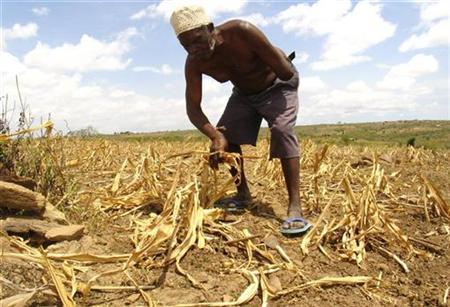
african corn farmer

In the conventional wisdom, Billl Gates has gone from geek, to megalomaniac software mogul bent on world domination, to a man so rich he can SAVE THE WORLD WITH HIS MONEY!

I cannot argue with his decision to dedicate his life to making things better through the Bill and Melinda Gates Foundation, but sometimes trying to make things better makes things worse. And that’s if your intentions are pure to start with. Mix in a partner who might have other motives, and well, you see where this is going….

This Grist article by Tom Laskawy discusses a recent venture by the Gates Foundation that sounds great on its face. The goal: to feed Africa. The method: GMO seed technology from DuPont’s biotechnology arm, Pioneer Hi-Bred.

Laskawy quotes a DesMoines Register news item, which mentions that DuPont rival Monsanto is involved in a simliar venture:

Pioneer Hi-Bred is joining with the Bill and Melinda Gates Foundation to help scientists in Africa develop genetically engineered corn varieties that would allow poor farmers increase their yields with less fertilizer.

The aim of the project is to increase corn yields by 50 percent over the average now reached by African varieties, said Paul Schickler, president of Pioneer, a Johnston-based unit of DuPont.

… Pioneer’s arch-rival Monsanto Co. is two years into a similar project with the Gates foundation to develop drought-tolerant corn that is to be made available to small-scale farmers in eastern and southern Africa.

Both Pioneer and Monsanto have agreed to make the seeds available royalty-free to small-scale farmers.

Lawkawy is skeptical.  And the not-so-fine print shows he has reason to be:

As for Pioneer, they will first use advanced conventional breeding techniques to improve yields, and then add their genetically engineered genes later. The conventional version should be ready by 2014. The transgenic version? Eventually.

From his years as CEO of Microsoft, Bill Gates knows well the name for this kind of product: vaporware. It’s hard not to think that Monsanto, Dupont and their ilk are turning into the Bernie Madoff of agriculture. Convince gullible foundations along with the federal government to send billions in research dollars their way based on a promise of magically awesome results. Sometime down the road, of course.

And of course the irony here is that a non-GMO solution exists, the development of seed varieties by local, African researchers such as the Nigeria National Variety Release Committee, who “developed the [improved] varieties through conventional plant breeding by tapping naturally-available traits.”

Wouldn’t it be simpler, and cheaper, wonders Laskawy, to just spend some foundation money (most likely a fraction of what goes to DuPont) on getting locally adapted seeds into local farmers’ hands?

_____________________________________

Note: You can find a good summary of objections to Gates’ faith in GMO technology here.

Obama’s energy budget — nukes get the goldmine, conservation gets the shaft

Maybe you know this. Maybe you don’t. (I didn’t, until fairly recently.) But the money for  building and maintaining nuclear weapons is NOT in the Pentagon’s budget. It’s in the budget of the Department of Energy. (Why?)

Just something to keep in mind as we all try to digest what the President means by “the largest investment in clean energy in history.”

The Institute for Policy Studies points out a few inconvenient truths (boldface is mine).

Despite Obama’s rhetoric about reshaping America’s energy future, he’s asking for a budget that would have the Energy Department continue to spend 10 times more on nuclear weapons than energy conservation. More than 65 percent of our energy budget covers military nuclear activities and the cleanup of weapons sites. Its single largest expenditure maintains some 9,200 intact nuclear warheads. Even though the department hasn’t built a new nuclear weapon for 20 years, its weapons complex is spending at rates comparable to that during the height of the nuclear arms race in the 1950s. Even with economic stimulus funding, the department’s actual energy functions comprise only 15 percent of its total budget and continue to take a backseat to propping up the nations’ large and antiquated nuclear weapons infrastructure. In fact, the Energy Department’s proposed budget for the 2011 fiscal year, minus stimulus money, looks a whole lot like it did in the Bush administration, and as it has during several presidents’ tenures.

And at Grist, David Roberts notes the expanded budget for building new nuclear reactors includes some potentially ginormous hidden costs:

To the naked eye it looks like nuclear energy wins out here:

The Budget substantially expands support for construction of new nuclear power plants by increasing the Department of Energy loan guarantees authority for such projects by $36 billion, to a total of $54.5 billion, and provides credit subsidy funding of $500 million to support $3 to $5 billion of loan guarantees for energy efficiency and renewable energy projects.

But it’s worth unpacking this. As OMB chief Peter Orszag emphasized in a briefing call this morning, the nuclear loan guarantees are meant to be fully repaid, while the renewable energy and energy efficiency money contains $500 million in credit subsidy. So there’s more direct spending on clean energy.

That’s with one big caveat, of course: that the nuclear industry doesn’t default on loans, sticking taxpayers with the liability. That could never happen, right? Ha ha. See Sue Sturgis and Dan Weiss on that subject. Or see the Congressional Research Service (PDF), which says the “federal government would bear most of the risk, facing potentially large losses if borrowers defaulted on reactor projects that could not be salvaged.” Or the Congressional Budget Office, which “considers the risk of default on such a loan guarantee to be very high—well above 50 percent.”

more on “cows the climate solution?”

cow image

I feel terrible that Seth Itzkan’s articulate response to a post of mine has languished in the WordPress spam queue for 6 weeks now.

The post in question, Cows the climate solution?, discussed Adam Sacks’ bold claim that well managed cattle grazing could solve all of our climate problems by the middle of the century! Seth’s very persuasive comment makes me think, Well, just maybe….

Thanks for your post which I found because I monitor Google Alerts for “Holistic Management”.  Actually, Adam Sacks is a colleague / friend of mine, and we’ve discussed these topics at length.  It’s nice to see that the word is getting out.

You are correct that Adam and George’s comments are not mutually exclusive because they are discussing different things.  As Adam states in his follow up, the issue isn’t about “cows” (although that’s the catch – I guess it worked!), the issue is about restoring grassland ecosystems – which are by far the largest stores of terrestrial carbon on the earth. Grasslands co-evolved with grazing mammals that moved in concentrated herds.  This herding action was caused by predation (wolves, lions and such).  The devastation of the world’s grasslands and is due largely to the removal of large mammals – not over grazing.  Too little grazing is as bad as too much.  Either way the grass dies.  This is the discovery of Alan Savory and the findings of the process of “Holistic Management”.  Please see http://www.holisticmanagement.org.  The more large animals are removed from their natural grassland ecosystems, the faster the grassland dies. Imagine that?  They actually need each other.

The problem today is that we have no sense of what a natural grassland ecosystem is.  When Louis and Clarke traveled across the Midwest they were walking over thousands of square miles of the riches soils on the planet, in many place over 10 feet deep with grasses just as high. Those soils, of course, are organic matter, which is, largely carbon, sequestered by plants that were kept alive by the “pulsed” animal impact. There were billions of tons carbon stored in those soils, most of which has run off into the oceans as topsoil loss.  The rest has been oxidized and become CO2 through burning and tilling.  At the time, there were 100 million buffalo, 100 million elk, and billions of prairie dogs, all eating, aerating, and recycling nutrients.  Gee, how did the grasslands survive with all that chomping? Heaven forbid. To restore those soils requires animal impact of the nature they evolved in – herd action, intense and short spurts or “pulses”.  The idyllic grazing that we see of a
few cows lounging around in short grass and mud is a modern, unnatural and unsustainable solution.  That’s *not* what we’re talking.

Environmentalist are correct in citing the damage that cattle do in their artificially maintained and poorly managed environments.  Of course.  No one is arguing for more of that. What Savory, and Adam are talking about is a new method of managing cows in a fashion that simulates the natural herd behavior that the grassland evolved this.  This takes the form of tightly packed groups of cows called “paddacks” that are moved frequently.  The process is known as Holistic Management.  The results are unequivocal.  Tens of millions of degraded soils have been restored this way, and small scales herders are viable now because of it.  It cost far less than traditional herding and greater “stocking levels” can be sustaining while improving the ecosystem.  In fact, as Savory says, this is the only method that will restore grassland soil.  No other method will work.  Grassland soils will not return without the animal impact that they evolved in.  It won’t happen.  The grassland will turn to
desert and their carbon sequestering potential will be lost.  The good news is that this process can be reversed.

Again, it isn’t about “cows”.  It’s about grazing mammals.  Cows can be managed in a way that mimics behavior that is beneficial to the soil.  We don’t give a flying hoot if it’s cows or bison, or elk, or giraffes, or elephants.  The action is similar.  Each is a grazing mammal that evolved in a grassland / savanna ecosystem.  When the animals are removed, the grassland ecosystem dies. We need millions more grazing animals moving about as natural herds, or in managed paddacks that replicate the herd behavior.  Seeing as so many people depend on cows, they may as well be managed in a fashion that is environmentally restorative – doing this sequesters, carbon, replenishes water tables, and creates viable enterprise for small rangers and herders.

Regarding methane.  Here is another case where the anti-cow environmentalists are missing the point. Miracle of miracle, the methane levels were less in the atmosphere when there were 100s of millions more grazing mammals on the earth than there are now – all of them eating grass and flatulating. How was that possible?  Because the animals were part of an ecosystem that was sequestering far more methane than they could ever produce.  It doesn’t matter how much gas the cows emit.  What matter is whether the soil ecosystem is being restored.  If it is, then methane is being sequestered at factors that are orders of magnitude greater than what the cow emits.  Cows are not an island.  We have a fragmented view of the problem.  Yes, grass fed cows in a feedlot may fart more than grain fed cows in a feedlot.  But, what’s the point of the comparison?  Both are unsustainable and deadly.

The more germane question is if the cows are part of a system that is environmentally restorative.  If they are being managed properly, they will be restoring the soil which will be sequestering methane, as well as CO2.  Cows (and all grazing mammals), are just a part of the system.  Recent studies have shown that a healthy grassland ecosystem will sequester 1000 times the methane produced by a cow on a space of soil adequate for that’s cows sustenance – repeat, 1000 times.  This is possible because of the methane eating microbes that are in the soil far outnumber the methane producing microbes in the cows stomach.  Methane digestion is an aerobic process. In a healthy soil (i.e. aerated), the methane eating microbes will dominate.  Where the soils are many feet deep, you are talking about thousands of cubic meters of methane eating soils compared to a few square feet of a cows stomach that is an anaerobic environment – thus produces methane.  In healthy soils, the methane eating
potential will always exceed the methane producing potential of the animals on it.  Again, it’s not about the cows.  It’s about the ecosystem. An aerated ecosystem will sequester methane.  Get the cows on the land, moving in a fashion that natures expects them to, and the methane problem will work itself out.

Restoring grassland soils is one of our most powerful tools in the fight against climate change.  Animal impact is essential to this process.  We need a deeper understanding of this process and it’s potential.  Thank you again for further considering it on your blog.

Chicken litter. It’s what’s for dinner!

cow face
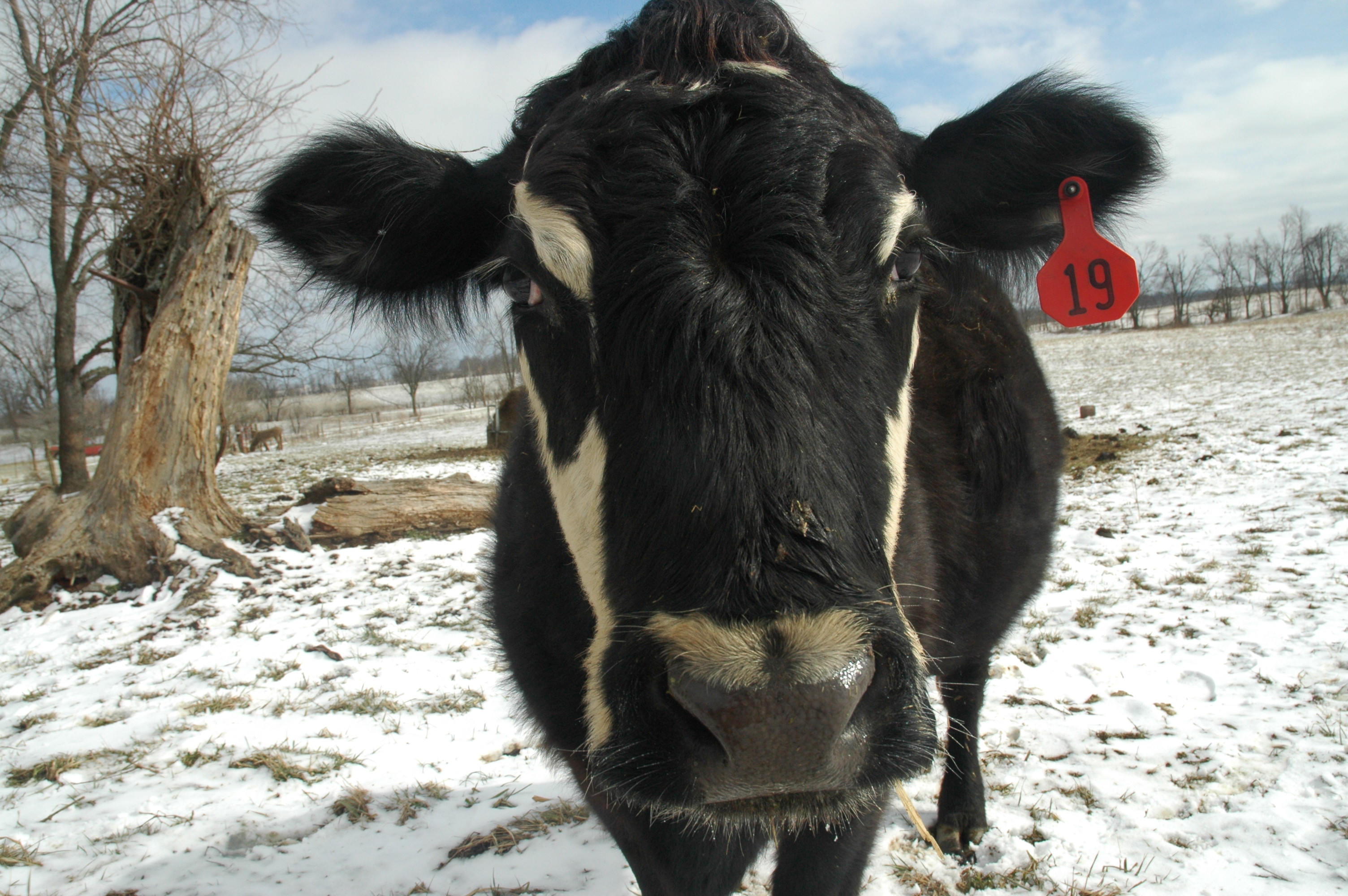
Nope, not eatin' THAT!

In a typically enlightening and frightening Grist article, Tom Philpott notices a few nasty ingredients that are now going into your “conventional” hamburgers.  Poultry litter, for one, thing, or in plain English, “feces mixed with bedding, feathers, and uneaten feed.”

A Missouri Extension publication blithely describes this gross practice as “provid[ing] opportunities for both the poultry producer and the beef cattle producer.” The Consumers Union sees it a little differently:

It can contain disease-causing bacteria, antibiotics, toxic heavy metals, restricted feed ingredients including meat and bone meal from dead cattle, and even foreign objects such as dead rodents, rocks, nails and glass. Few of these hazards are eliminated by any processing that might occur before use as feed. The resulting health threats include the spread of mad cow disease and related human neurological diseases, the development of antibiotic resistant bacteria, and the potential for exposure to toxic metals, drug residues, and disease-causing bacteria.

Philpott also points out that crude (i.e. unpurified) glycerin, a biodiesel byproduct which goes into cosmetics (in purified form)  is now finding its way into feedlot food, as well as distillers grains, even though, as Philpott notes, “regulators acknowledge that the [latter] practice seems to encourage the growth of the deadly-to-humans pathogen E coli 0157. Distillers grains are also loaded with antibiotic residues and various industrial chemicals.”

And finally, because you might have missed it, the massive Huntington Meat Packing recall of beef tainted with  e. coli 0157 was not a mere 866,000 pounds of ground beef (enough for 3.56 million Quarter Pounders).  It was five times that amount!

As per the USDA

Huntington Meat Packing Inc., a Montebello, Calif., establishment, is expanding its recall of January 18 to include approximately 4.9 million additional pounds of beef and veal products that were not produced in accordance with the company’s food safety plan.

The USDA release also notes that the Huntington “recall was expanded based on evidence collected in an ongoing criminal investigation being conducted by the Office of the Inspector General (OIG) with assistance from FSIS.”

Are you lovin’ it yet?

Scroll to top